
Description
Presentation
A Direct Antiglobulin Test (DAT) or Coombs Test is performed to detect the presence of antibodies against red blood cells. It is used in the diagnosis of Immune- Mediated Hemolytic Anemia (IMHA). IMHA is the most common cause of hemolytic anemia in dogs.
There are 2 forms of IMHA:
- The first one is idiopathic IMHA (or primary IHMA) which is probably due to a dysregulation of the immune system.
- The Second one (secondary IMHA) is associated with several diseases such as infection diseases (virus, bacteria, parasitic…) or haemopathy or auto immune diseases (lupus). Drug reactions could also induce a secondary IMHA
Our technology
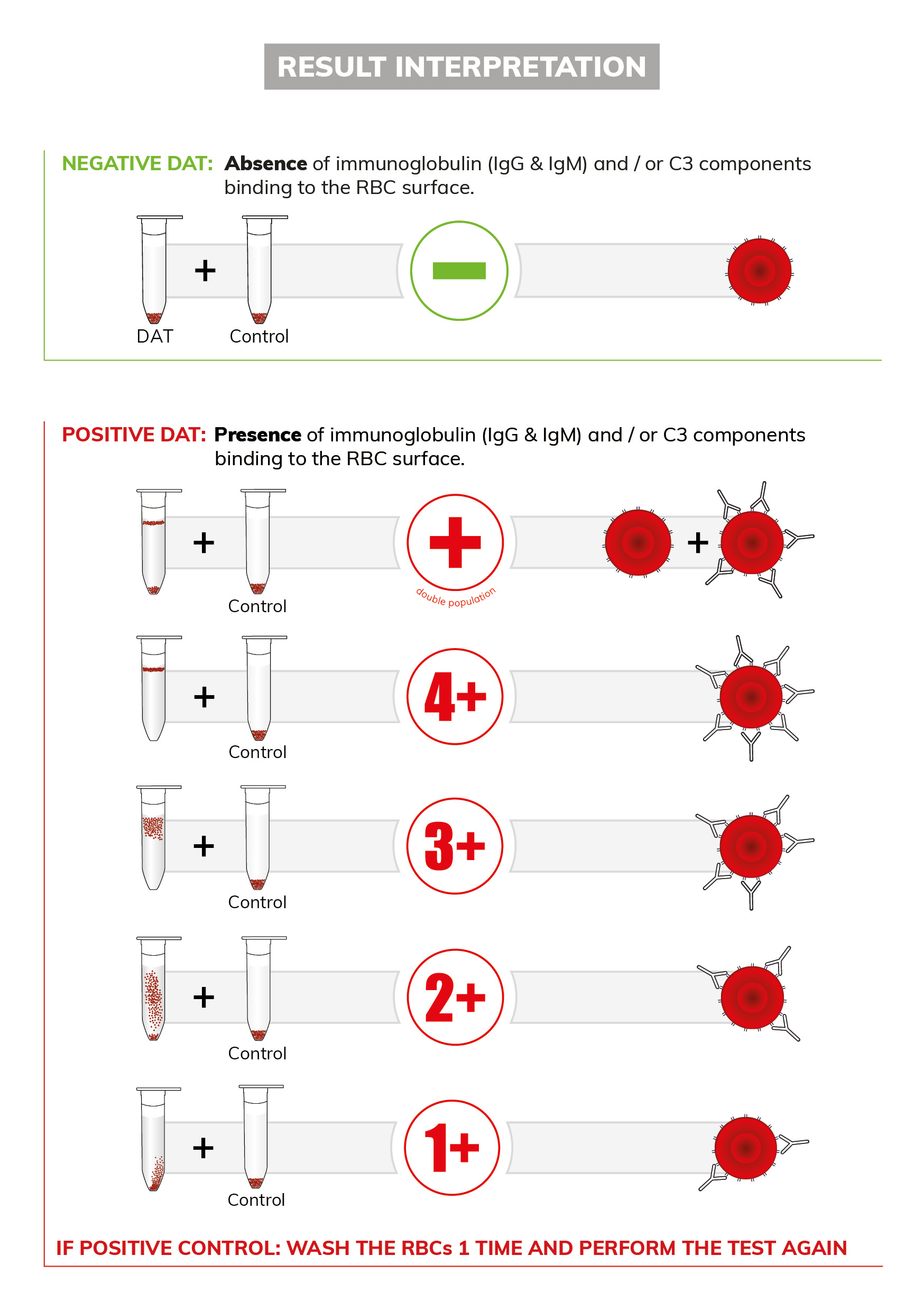
Our canine DAT Gel Test (or Coombs Test) is based on an individual Gel Test microtube filled with a mixture of gel and specific canine Antiglobulin reagent that will detect the presence of immunoglobulins (IgG & IgM) and/or C3 components binding to the red blood cells surface. A positive result indicates an in vivo sensitization with the presence of auto-immune antibodies.
MATERIAL
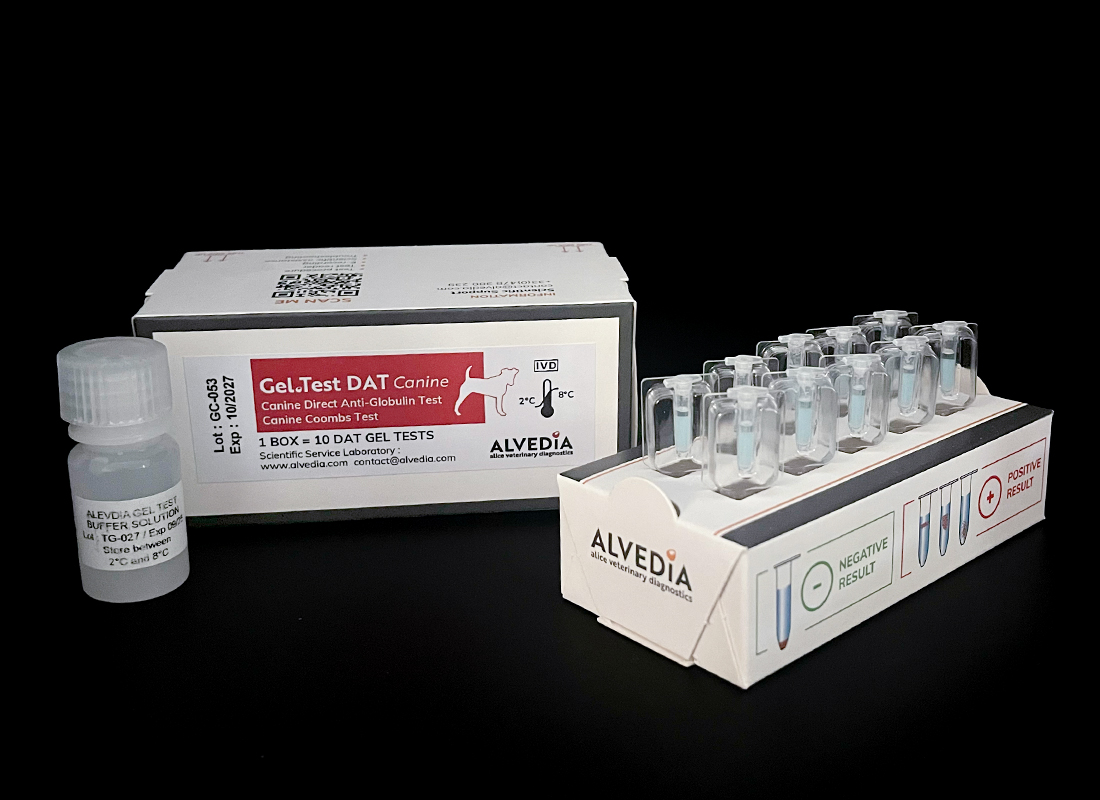
- 1 Box of 10 gel Tests
- 1 Buffer solution
GEL TEST PRODUCTS REQUIRE THE SPECIFIC CENTRIFUGE HETTICH EBA 270 OR DRUCKER TRUE BOND.
DO NOT PURCHASE THE CENTRIFUGE BEFORE ORDERING THE GEL TEST PRODUCTS.
Please contact us at contact@alvedia.com for more information regarding the purchase of the specific centrifuge.

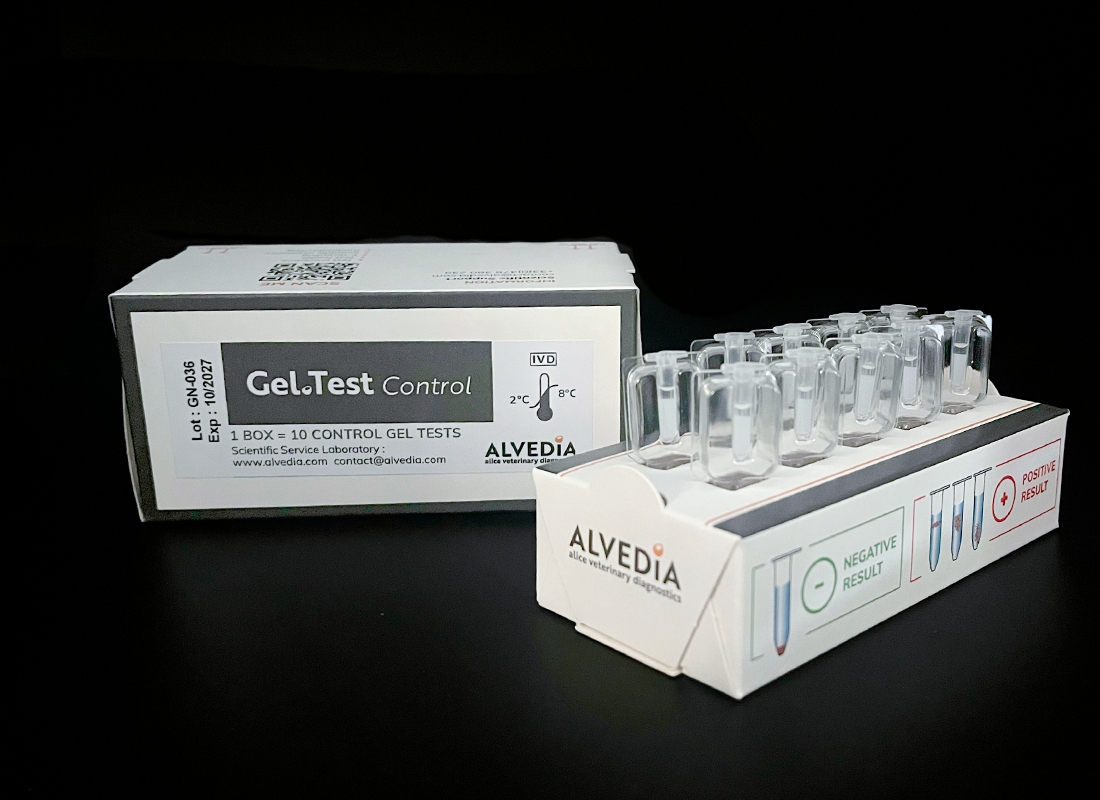
AN AUTOCONTROL GEL TEST SHOULD BE PERFORMED AT THE SAME TIME AS EACH CANINE DAT GEL TEST.
MATERIAL PROVIDED:
- 1 Box of 10 gel Tests
User's guide
RESULTS
PRODUCT INFORMATION
Canine Gel Test DAT – GT-DAT-C-10 – Box of 10 Gel Test DAT Canine
Movie Procedure
SCIENTIFIC INFORMATION & limitations
Scientific information:
-
This DAT test (Direct Antiglobulin Test or Coombs Test) will detect auto-antibodies bound directly on the patient’s RBCs, confirming immune-mediated hemolytic anemia (IMHA).
-
The test recognizes both non-associated or primary (idiopathic/autoimmune) IMHA and associated or secondary IMHA, in which red cell destruction is triggered by an underlying condition.
-
Main associated IMHA in dogs: infections (tick-borne diseases such as Babesia, Ehrlichia, Anaplasma; hemotropic Mycoplasma; Leptospira), neoplasia (lymphoma, hemangiosarcoma), drug reactions and inflammatory disorders.
-
Antibiotics particularly penicillins, cephalosporins and sulfonamides may cause a false-positive DAT. Interpret results with caution in patients receiving antibiotic therapy.
-
A positive DAT will remain positive even under corticosteroid therapy and will not turn negative until clinical remission is achieved.
-
The DAT is an ideal tool for patient monitoring: it can be repeated weekly to follow disease progression and adjust immunosuppressive therapy according to the results.
Transfusion cases:
- After transfusion, a positive DAT may reflect alloantibodies bound to donor red blood cells (alloimmunization) rather than true IMHA and should be interpreted in the clinical context.
- The DAT can also be used after transfusion to detect alloantibodies bound to donor red blood cells in cases of alloimmunization.
- Test results must be interpreted in conjunction with the clinical and therapeutic context.
Limitations:
-
If the blood tube is hemolyzed OR more than 72 hours: wash 1 time in PBS or saline buffer (NaCl 0.9%) to obtain washed pRBCs.
-
Do not use Gel Test tubes which show signs of drying.
-
Gel Test tubes which show air bubbles or gel drops in the upper part of the tube must be centrifuged before use.
-
Strict adherence to the procedures and recommended equipment, especially the Hettich EBA270 and Drucker True Bond, is essential for a reliable and validated result.
-
A non-specific centrifuge (fixed angle centrifuge) will give you false positive results.
-
Debris, fibrin residues or other artefacts may cause a few unagglutinated cells to trap on top of gel, but these should be interpreted as negative.
-
Use of suspension solutions others than the provided one may modify the reactions.
-
Too diluted or concentrated red blood cell suspensions can cause aberrant results.