
Description
Importance of crossmatching
Dogs have many blood types on the surface of their red blood cells and with the absence of test kits for all of these blood groups (except for DEA 1), it is mandatory to perform a reliable crossmatch test before any transfusion. Crossmatching aims to establish a serological compatibility between the recipient and the donor. This test allows you to detect all DEA incompatibilities, including DEA 1, DEA 4, DEA 7… and other red blood cell alloantibodies.
Benefits
- 15 minutes procedure.
- All material included.
- Time saving.
- Easy handling.
- Reliable results.
- Easy interpretation.
Our technology
Our canine crossmatch test (major and/or minor) is based on an immuno-chromatographic technology that will detect the presence of alloantibodies binding to the red blood cells (RBCs) surface after a mismatched transfusion or rare naturally occurring alloantibodies.
MATERIAL
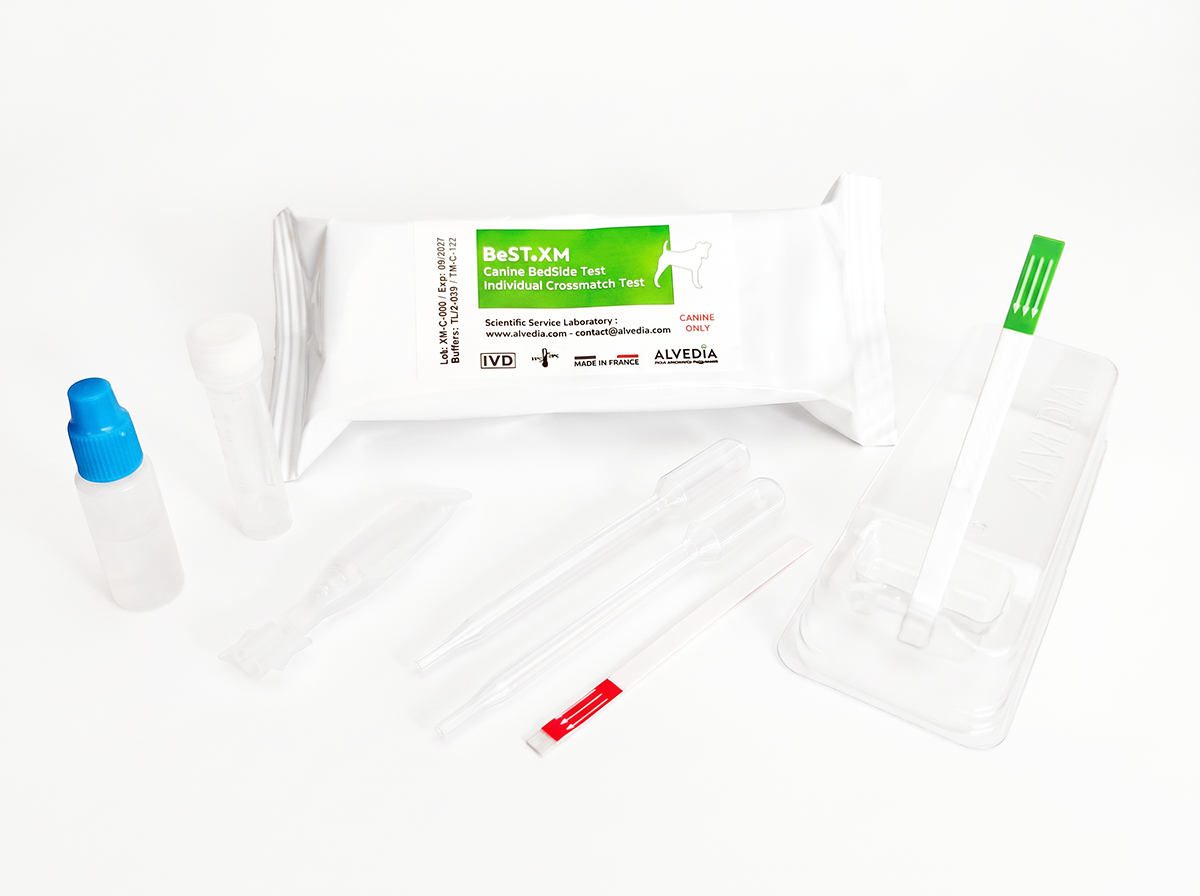
Material provided :
- 1 BeST XM Test
- 1 plastic blister
- 1 Blood collector strip
- 1 Blue top buffer
- 1 test tube
- 2 pipettes
- 1 migration buffer
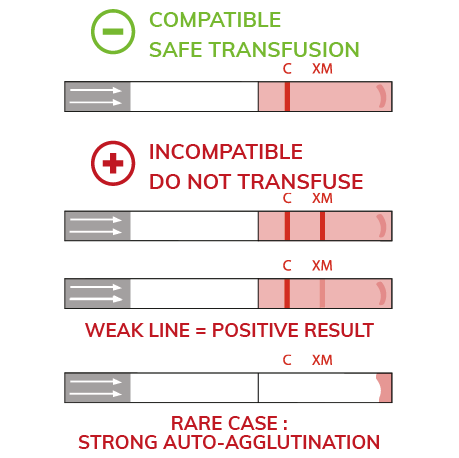
RESULTS
LABTEST VERSION (bulk packaging)
– Same technology
– Designed for laboratories and high-volume users
– Requires standard laboratory equipment such as pipettes, tips and test tubes
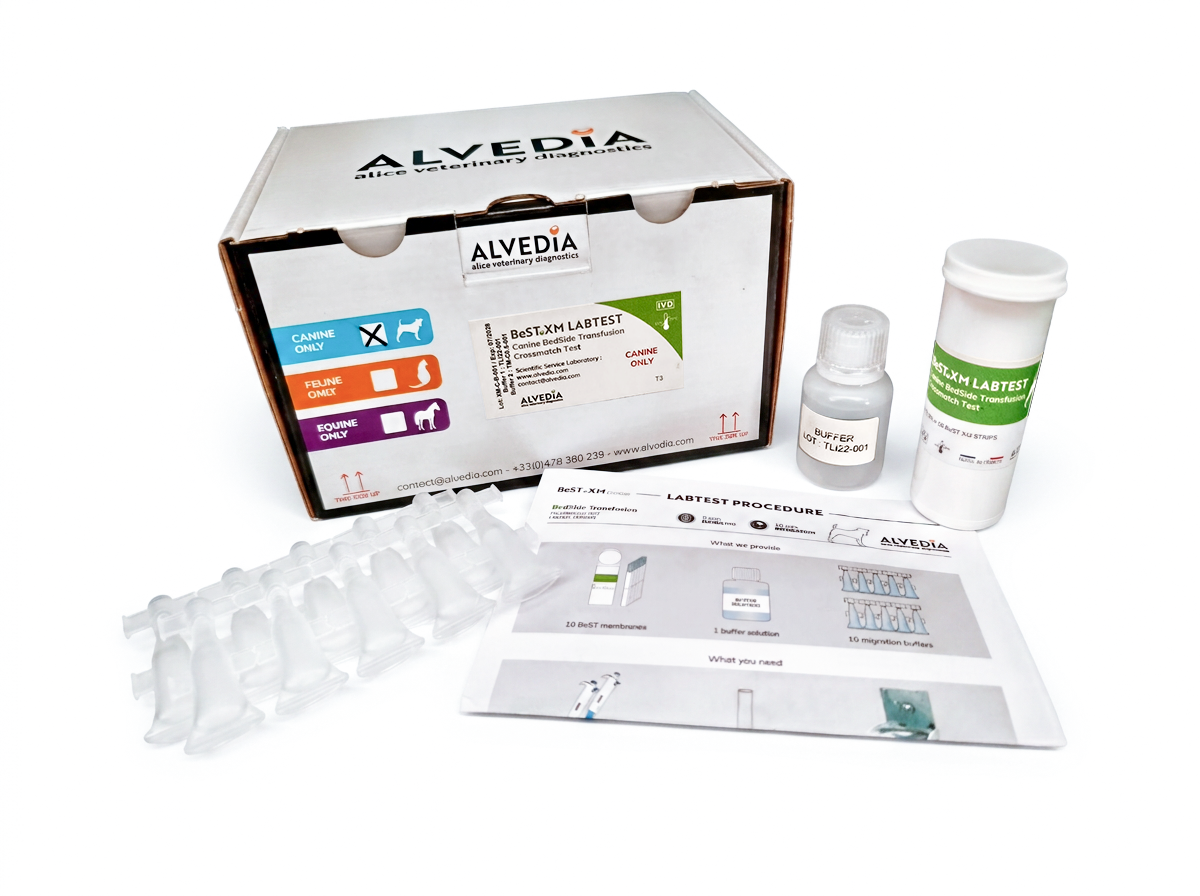
Material provided :
- 10 BeST membranes
- 1 plastic blister
- 1 buffer solution
- 10 migration buffers
Material non provided :
- 2 micropipettes (10-100μl + 100-1000μl)
- 1 test tube (5mL) for 1 XM Test
- Standard centrifuge
PRODUCT INFORMATION
BeST XM Canine (Crossmatch Test) – BQT-XM-C – 1 TEST (individual packaging)
BeST XM LabTest Canine (Crossmatch Test) – BLT-XM-C – 10 TESTS / BOX (bulk packaging)
movie procedure
BeST XM Canine
BeST XM LabTest Canine
SCIENTIFIC INFORMATION
- This test allows you to detect all DEA incompatibilities, including DEA 1, DEA 4, DEA 7… and other red blood cell alloantibodies.
- This test is used to detect alloantibodies after a mismatched transfusion or rare naturally occurring alloantibodies.
- For better sensitivity, especially in weak incompatibilities, we recommend confirming results with the Alvedia Gel Test technology (detection of low-affinity antibodies).
- Blood typing for DEA 1 is always recommended before any transfusion.
- Positive XM reactions may be observed in IMHA patients due to circulating autoantibodies present in the recipient plasma.
- Test results must be interpreted in conjunction with the clinical and therapeutic context.